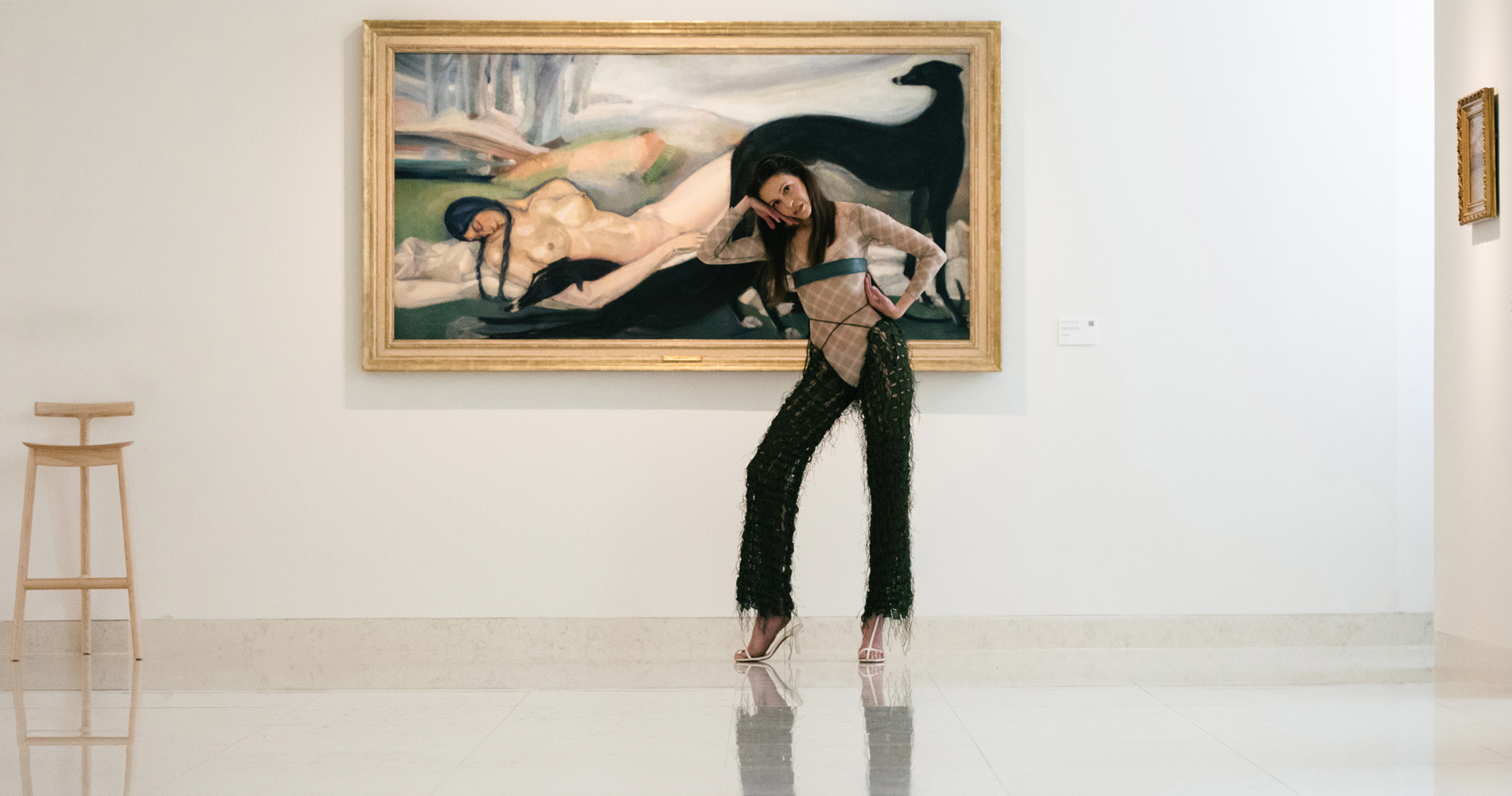
Lino Antonio, A Mulher e os Galgos (The Woman and the Greyhounds), MACAM;
Maria Carlos Baptista leather bandeau, Veehana woven pants, Neous Jumel sandal
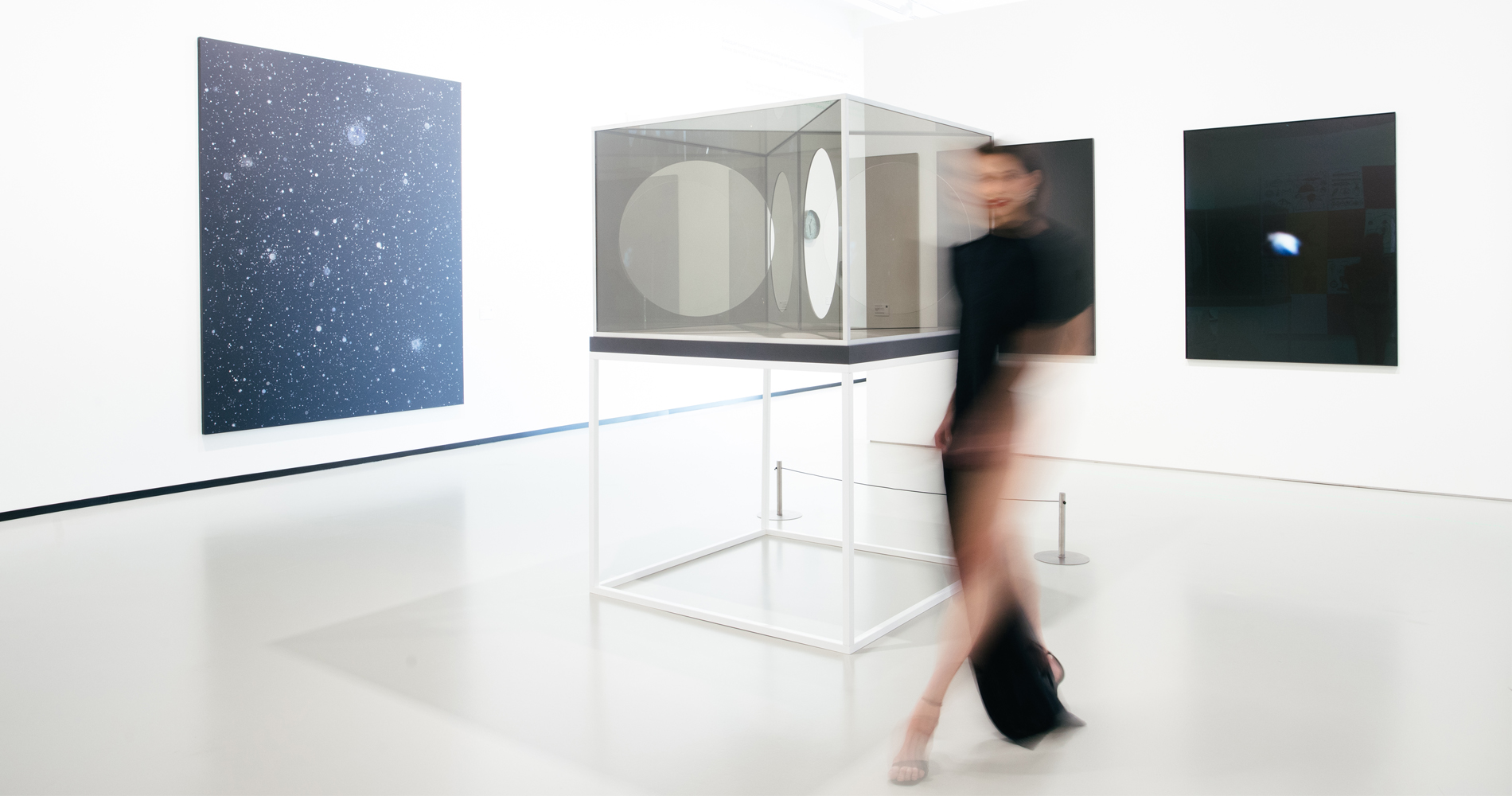
Dan Graham, Pavilion Influenced by Moon Windows (Variation E); Rui Toscano, Star Field; Marcio Vilela, Atlas Centaur, da série «Satellites», MACAM;
Veehana backless dress, Duha satin heel
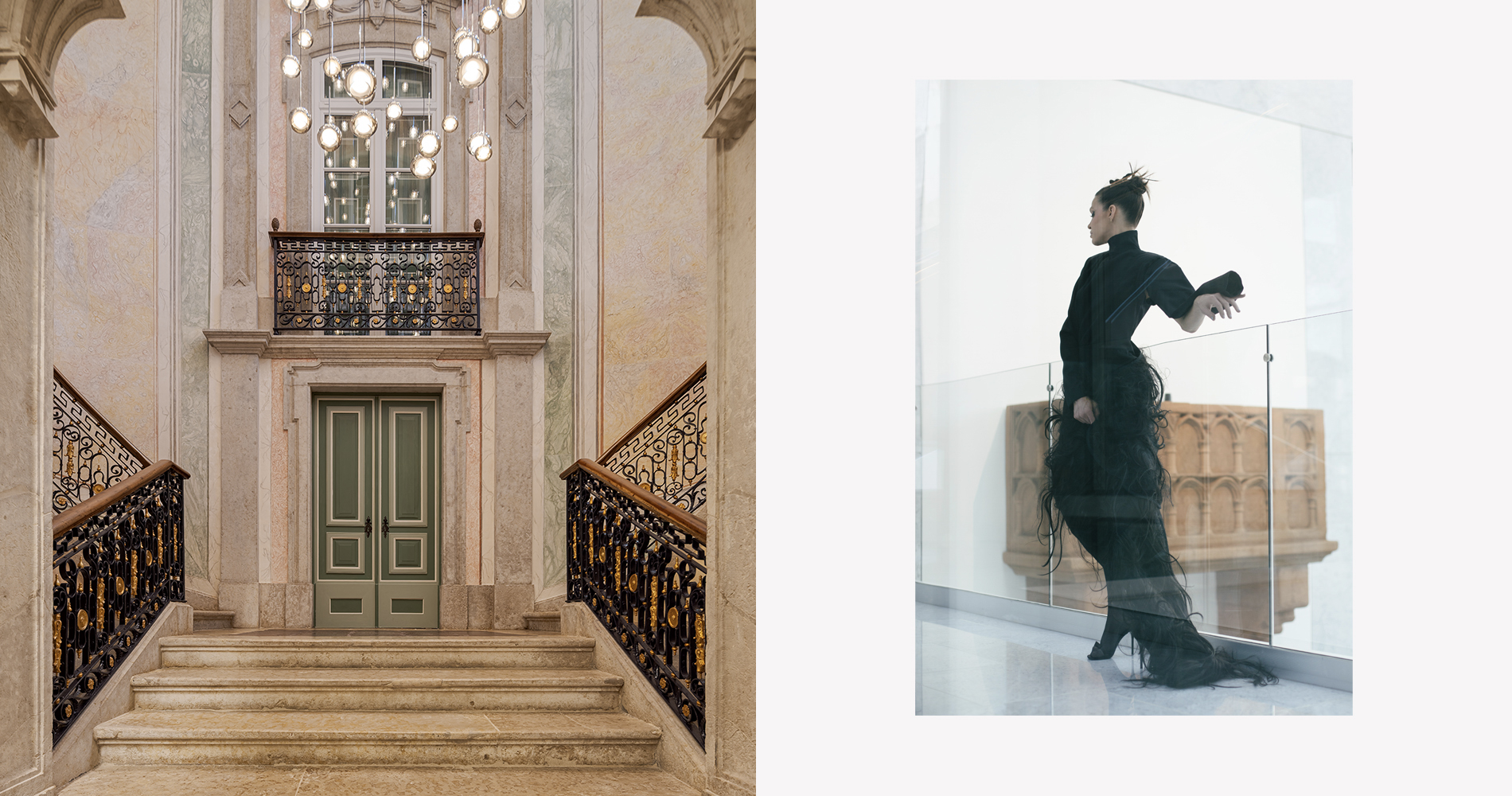
Isabel Cordovil, Juliet & Juliet, MURMUR #2, MACAM;
Maria Carlos Baptista turtleneck, Maria Carlos Baptista horse hair wrap
The aim of a museum should be extended contact with its visitors or in this case inhabitants. I wake up where the image of architectural splendor and art incarnate. In Lisbon, Portugese collector Armando Martens has meticulously restored the Palácio dos Condes da Ribeira Grande hybridizing the 18th-century palace with a contemporary extension to form a luxury hotel within a museum. MACAM is the first of its kind in Europe.
The history of museums is deeply linked to the history of private collections. The foundation of MACAM is Armando Martins’ personal collecting journey, over 600 works anchored by his early acquisitions which focused solely on Portugese art extending to immersive installations by international art stars. In a unique case of modern patronage and vision, The House of Private Collections will extend the invitation to other private collectors to present their holdings within the adjacent new building. Its long façade incorporates a compositional brise-soleil of white, dimensional tiles by Portuguese ceramic artist Ana Vasco Costa, a work of art itself. A narrow reflecting pool spanning the length of the building casts delicate, dancing shadows on the scrims within the galleries. The architecture is a balm for the art.
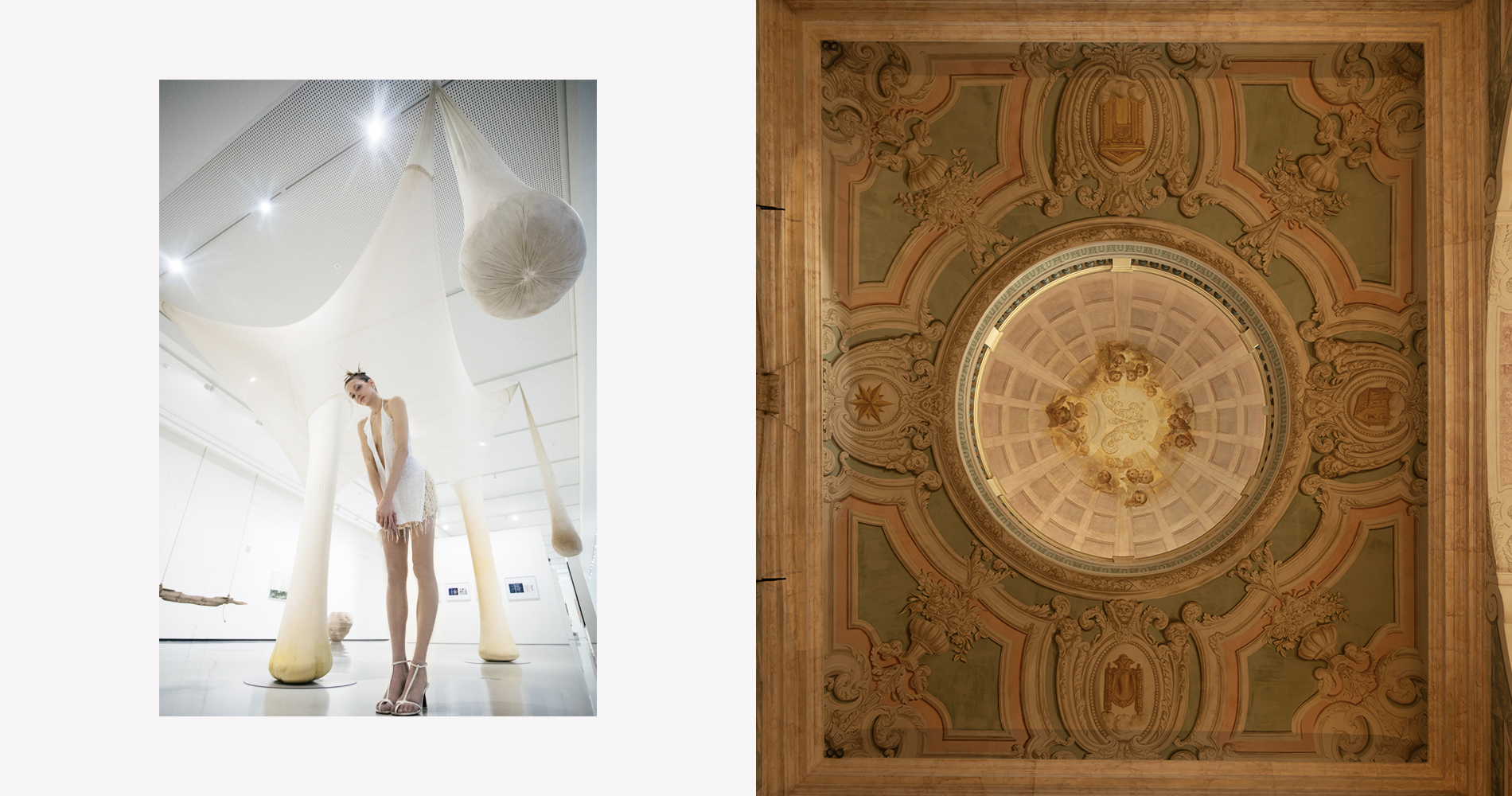
MACAM is set between the neighborhoods of Alcântara and Belém, a small paradise a stone’s throw from the Tagus River. Once inside the old palace, two vast galleries for the permenant collection flank the entry space. Moving through to the hotel, I ascend a monumental stair with walls and ceilings lush with historical frescoes. During restoration, fireplaces and fountains hidden behind walls and beneath courtyards were revealed. Art is everywhere. A grand library down the hall from my room is brimming with rare books from Armando Martens’ personal collection.
Discovery, escape and enrichment are the vernacular. My room is a palate cleansing sanctuary of neutral warm oak floors and crisp cream bed linens appointed with furniture and fittings all made by Portugese designers. I open the window to epiphanies and see framed a sculpture garden with an iceberg mountain marble fountain by Cristina Ataíde and a painted bronze fawn by Miguel Branco, more surreal in scale than a dream.
In the gallery of Portugese modernism I mingled with The Woman and the Greyhounds by Lino António emulating the chromatic contrast imagining limbs intertwined in the designs of Portugese designers, Veehana’s post-Eden woven chaps and Maria Carlos Baptista’s liminal leather band. Beaming into The Anthropocene where polyamide pouches of clove and saffron suit me perfectly. I wish you could be here too, in Ernesto Neto’s sight touch olfactory sculpture, the transpiration of the spices mix with mine. Culture is a sub product of nature, nature is the figure and we are the background. Strolling laps around Dan Graham’s Pavilion influenced by Moon Windows (Variation D). When I open the door, a piece of twilight falls into me. Little moments dreamed all the way to distant stars.
MURMUR is a bright flicker in MACAM’s constellation of programming, in its second edition curated by Carolina Quintela, Portugese artist Isabel Cordovil presents a site specific installation entitled Juliet and Juliet, reshaping the identity of Shakespeare’s tragically fated icon with two identical facing balconies where a cup-and-string telephone stretches between the two sylables of Being. The designer Maria Carlos Baptista, understanding the connection between body and space, reconciles and walks the line between polarities.
MACAM is a bright existence in the redefining of art travel. If you are looking for me, I will be sleeping at the museum as that is the oasis of now.
Lino António, A Mulher e os Galgos (The Woman and the Greyhounds), c. 1926;
Maria Carlos Baptista leather bandeau, Veehana woven pants, Neous Jumel sandal
Ernesto Neto, Arquitetura Animal, 2001;
Veehana woven halter top, Veehana woven skirt, Neous Jumel sandal
Dan Graham, Pavilion Influenced by Moon Windows (Variation E), 2017;
Rui Toscano, Star Field, 2013; Márcio Vilela, Atlas Centaur, da série «Satellites», 2019;
Veehana backless dress, Duha satin heel
Isabel Cordovil, Juliet & Juliet, 2025;
Maria Carlos Baptista turtleneck, Maria Carlos Baptista horse hair wrap, Duha satin heel
Hair & Makeup by Frederico Simaõ, Photographs by Francisco Gomes